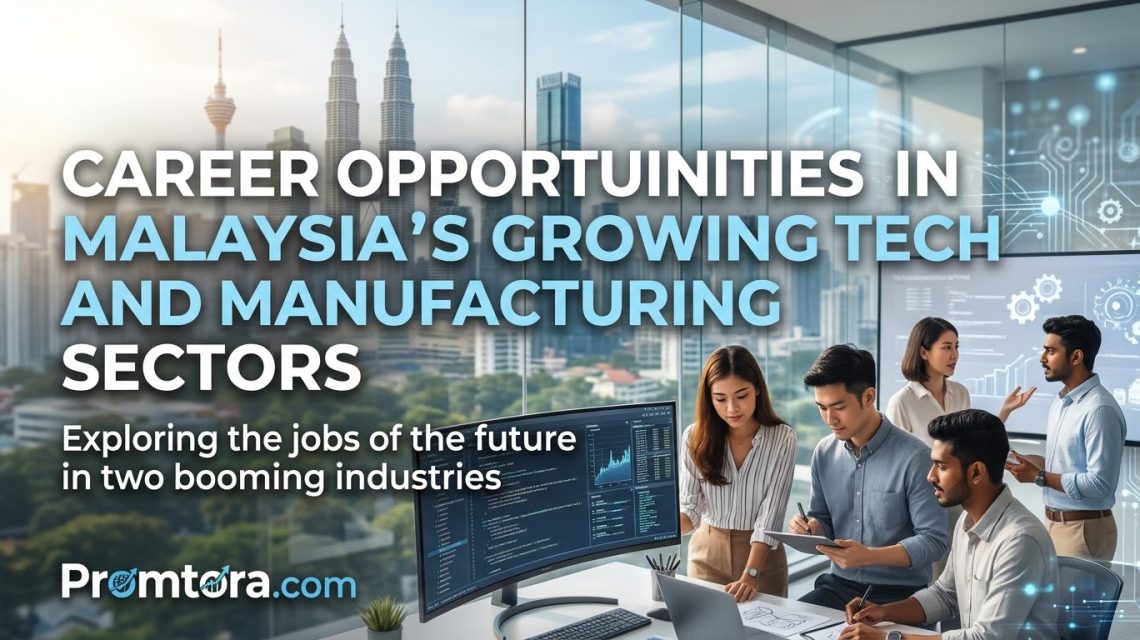
Career Opportunities in Malaysia’s Growing Tech and Manufacturing Sectors
A few years ago, if someone said the hottest engineering jobs in Malaysia would involve keeping giant server halls cool and powered, most people would have looked puzzled. In 2026 / 2027 that is exactly what is happening. Data-centre projects and the semiconductor push are running side by side, creating a wave of openings that did not exist in the same volume even three years earlier. At the same time, software, data and AI roles continue to expand as companies modernise systems and build local capability. The result is a labour market that feels genuinely tight for people with the right mix of technical skills.
This is not a story of endless vacancies for every graduate. Entry-level generalist positions remain competitive, and many employers still prefer candidates who can demonstrate practical experience. What has changed is the range of specialised paths that now pay noticeably above the national median and offer clearer progression. The people who move fastest are those who match their skills to the two big growth engines: the physical infrastructure of data centres and advanced manufacturing, and the digital layers of software, cloud and artificial intelligence.
Where the demand is concentrated
Two clusters dominate the conversation in 2026 / 2027. The first is the data-centre and cloud build-out. Google’s additional US$15 billion commitment, alongside other hyperscale and local projects, is expected to support tens of thousands of jobs during construction and thousands more once facilities are running. Electrical and mechanical engineers who understand power systems, cooling, and critical infrastructure are among the scarcest profiles. Networking, cybersecurity and operations roles follow closely behind.
The second cluster is electrical and electronics manufacturing, especially semiconductors. Malaysia’s National Semiconductor Strategy continues to push the industry beyond assembly and test toward design, advanced packaging and higher-value processes. Penang, Kulim and parts of Johor remain the traditional heartlands, but investment is spreading. Process engineers, equipment engineers, IC design talent and quality specialists are repeatedly listed as hard to fill. A single semiconductor recruitment day in late 2026 drew more than 8,000 jobseekers and offered over 1,500 openings, with graduate packages starting in the RM5,000–RM8,000 range and senior roles reaching much higher.
Software engineering, data and AI sit across both worlds. Financial services, telecommunications, shared-service centres and product companies continue to hire full-stack, backend and frontend developers. Data engineers, AI and machine-learning specialists, and cloud or DevOps engineers command some of the strongest packages because the skills are transferable and still in short supply relative to demand.
| Role area | Typical monthly basic range (RM) | Notes |
|---|---|---|
| Software engineer (mid to senior) | 7,000 – 14,000+ | Leads often 15,000 – 20,000 |
| Data / AI / ML engineer | 8,000 – 18,000+ | Among the highest premiums |
| Cloud / DevOps / SRE | 9,000 – 21,000 | Strong demand across industries |
| Data-centre electrical / mechanical | 5,000 – 15,000 (senior higher) | Chargeman and critical-power skills valued |
| Semiconductor process / equipment | 4,500 – 12,000+ | Advanced packaging and design higher |
| IC design / verification | 6,000 – 15,000+ | One of the scarcest specialisations |
| Fresh engineering / tech graduate | 3,500 – 8,000 | Higher in semiconductor and data-centre roles |
Ranges compiled from 2026 recruiter guides (Randstad, Michael Page and others), job-posting analyses and industry reports. Actual offers vary by company, location, specific skills and experience.
VIEW ALSO : Malaysia gdp per capita vs China
Locations that matter
Kuala Lumpur and the wider Klang Valley still dominate pure software, fintech, shared services and headquarters roles. Cyberjaya continues to host digital and data-related operations. Penang and the northern corridor remain the strongest base for semiconductor and electronics manufacturing. Johor has become a major data-centre and advanced manufacturing hub, helped by the proximity to Singapore and ongoing infrastructure projects. Candidates willing to relocate, or to work hybrid arrangements that include site time, generally see more options and sometimes better packages.
Remote work exists, especially in software and certain data roles, but many manufacturing, data-centre and operations positions remain site-based by nature. Employers in tight specialisations are more willing to discuss flexibility once the core technical requirements are met.
Skills that actually open doors
For software and data roles the usual stack still matters — Python, Java, JavaScript frameworks, SQL, cloud platforms (AWS, Azure and increasingly Google Cloud), containers and CI/CD. What separates stronger candidates is the ability to show real systems they have built or improved, not just coursework. AI and machine-learning experience, even at a practical rather than research level, is increasingly valued.
In manufacturing and data centres the requirements are more physical and process-oriented. Electrical engineers with knowledge of high-voltage systems, power distribution and critical cooling stand out. Mechanical engineers familiar with HVAC and precision environments are sought after. Semiconductor process and equipment roles reward hands-on experience with specific tools and a solid grounding in yield, quality and statistical process control. Certifications such as Chargeman licences for electrical work can move a candidate up the shortlist quickly.
Soft skills still count. The ability to work across teams, document processes clearly, and learn new tools on the job remains important in both sectors. Language ability, particularly English and in some manufacturing settings Mandarin, continues to be an advantage with multinational employers.
Realistic expectations and the entry challenge
Fresh graduates without relevant internships or projects often find the first step the hardest. Many postings that look junior still prefer some practical exposure. Structured graduate programmes, industrial training, and company-specific upskilling initiatives have become more common precisely because the pure supply of ready talent is limited. Once inside, progression can be relatively fast in high-demand specialisations because employers are competing to retain people.
Mid-career professionals who already have three to seven years of relevant experience are in a stronger position. Moving from a generalist IT role into cloud or data, or from general manufacturing into semiconductor process or data-centre operations, is a common and often well-rewarded path. Salary jumps of 20–40 percent are not unusual when the skill match is clear and the candidate is willing to change company or location.
The national median wage remains far lower than the packages in these growth areas. That gap is one reason the roles attract strong interest. It is also why employers emphasise continuous learning: the technology and the processes keep moving, and yesterday’s skill set can become average quickly.
The wider context and the limits of the boom
Government targets around AI readiness, digital talent frameworks and the semiconductor strategy provide a supportive backdrop. Large investments from Google, AWS and others, together with domestic manufacturing commitments, create real demand. At the same time, the volume of high-skilled openings is still measured in the thousands rather than tens of thousands per year in any single specialisation. Not every engineering or computer-science graduate will land a premium role immediately.
There is also a practical tension. Data centres and advanced manufacturing require significant capital and specialised skills. The risk of creating islands of high-paid work while larger parts of the workforce remain in lower-productivity roles is real. For individuals, the safer strategy is to treat the current demand as an opportunity to build scarce, transferable capabilities rather than as a guarantee of easy employment.
For someone deciding where to focus study, training or a career move in 2026, the clearest signals point toward electrical and mechanical skills tied to data-centre and semiconductor operations, cloud and infrastructure engineering, data and AI capabilities, and software development that sits close to these industries. The companies hiring are real, the projects are funded, and the shortage of ready talent is visible in both recruiter reports and the queues at specialised job fairs. The advantage goes to those who prepare for the specific technical demands rather than waiting for a general upturn to lift every boat equally.