What Is the Minimum Basic Salary for Foreign Workers in Malaysia?
Malaysia has a large foreign workforce employed under different types of work permits. The minimum basic salary that applies depends on the category of worker and the type of pass they hold. There is no single figure that covers every foreign employee. The rules distinguish clearly between lower-skilled foreign workers on Temporary Employment Visit Passes (PLKS) and higher-skilled expatriates on Employment Passes (EP).
This article explains the current minimum basic salary rules for foreign workers in Malaysia as of late 2026, the planned changes for 2027, and the practical differences between the two main categories of foreign employment.
National Minimum Wage (Applies to Most Foreign Workers)
The national minimum wage in Malaysia is set by the Minimum Wages Order and applies to both Malaysian citizens and foreign workers who are employed under a contract of service. This includes the large majority of foreign workers holding a PLKS (Pas Lawatan Kerja Sementara), commonly used in manufacturing, construction, plantation, agriculture and certain service sectors.
As of 2026 the national minimum wage is RM1,700 per month.
From June 2027 the rate is scheduled to rise to RM2,000 per month. Micro, small and medium enterprises (MSMEs) with annual sales below RM50 million will remain on the RM1,700 rate for the time being. The government has confirmed that the higher rate will also apply to foreign workers employed by companies that are subject to the increase, in line with International Labour Organization standards on equal treatment.
The minimum wage is a basic salary floor. Allowances such as housing, transport or food cannot normally be used to make up the difference if the basic wage itself falls below the statutory minimum.
Employment Pass (Expatriate) Minimum Salary Thresholds
Foreign professionals, managers and skilled specialists are usually employed under an Employment Pass rather than a PLKS. These passes have their own, much higher minimum basic salary requirements. The thresholds were revised with effect from 1 June 2026.
The current Employment Pass categories and minimum basic monthly salaries are:
- Category I: Minimum RM20,000 (previously RM10,000). Pass can be issued for up to 10 years.
- Category II: RM10,000 to RM19,999 (previously RM5,000–RM9,999). Pass can be issued for up to 10 years, subject to a succession plan.
- Category III: RM5,000 to RM9,999 (previously RM3,000–RM4,999). Pass can be issued for up to 5 years, subject to a succession plan.
These figures refer to basic salary. The higher thresholds are designed to ensure that Employment Pass holders fill genuine skilled or specialised roles and to reduce reliance on lower-cost foreign labour for positions that could be filled by Malaysians.
Applications submitted on or after 1 June 2026 must meet the new thresholds. Existing Employment Pass holders are generally not affected until they apply for renewal.
Key Differences Between PLKS and Employment Pass Workers
Understanding the distinction is essential:
- PLKS / Temporary Employment Visit Pass – Used mainly for semi-skilled and lower-skilled workers in approved sectors. These workers are covered by the national minimum wage (RM1,700 in 2026, rising to RM2,000 in June 2027 for most employers). Employers also pay an annual levy and must follow quota and recruitment rules.
- Employment Pass – Used for professionals, managers and skilled specialists. These workers must meet the much higher Category I, II or III salary thresholds. They are not subject to the same levy system as PLKS workers.
Domestic helpers (maids) are generally excluded from the national minimum wage rules and are governed by separate arrangements.
What Counts as Basic Salary
The statutory minimum (and the Employment Pass thresholds) refer to basic salary. Fixed allowances may be paid in addition, but they do not usually count toward meeting the minimum basic wage requirement. Employers must ensure the basic component itself meets the applicable floor.
Overtime, shift allowances and other variable payments are calculated on top of the basic wage according to the Employment Act and any applicable collective agreements.
VIEW ALSO : Malaysia salary for domestic helper
Employer Obligations and Compliance
Employers hiring foreign workers must:
- Pay at least the applicable minimum basic salary (national minimum wage for PLKS holders or the relevant EP category threshold).
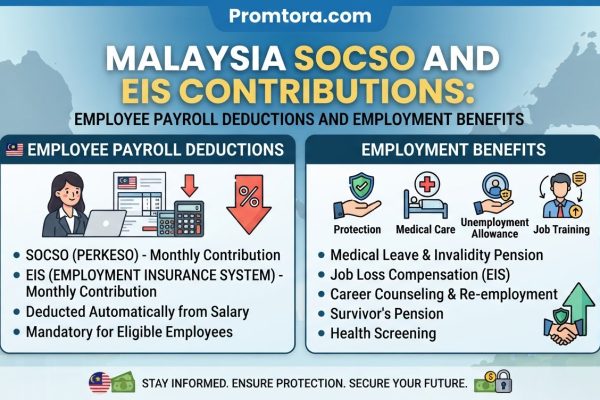
- Make the required statutory contributions (including the employer’s share of EPF for foreign workers where mandatory, SOCSO and EIS).
- Comply with quota, levy and recruitment procedures for PLKS workers.
- Ensure Employment Pass applications and renewals meet the current salary thresholds and other conditions set by the Immigration Department and Ministry of Home Affairs.
Failure to pay the correct minimum can result in enforcement action, fines and complications with future work-permit applications.
Planned Changes and Policy Direction
Two major developments are relevant in 2026–2027:
- The national minimum wage increase to RM2,000 from June 2027 (with the MSME exemption noted above). This will apply to foreign workers on the same basis as local workers for employers that are not exempted.
- The higher Employment Pass salary thresholds that took effect on 1 June 2026, which significantly raised the cost of bringing in expatriates at the lower end of the skilled spectrum.
These measures form part of a broader policy to raise wages, reduce over-reliance on low-cost foreign labour, and encourage the development of local talent.
VIEW ALSO : What jobs pay well in the Netherlands?
Practical Implications for Employers and Workers
For employers, the cost of hiring lower-skilled foreign workers will rise in 2027 for companies above the MSME threshold. The cost of hiring mid-level expatriates has already increased because of the new Employment Pass floors.
For foreign workers themselves, the national minimum wage provides a legal floor for those on PLKS, while those on Employment Passes must be offered salaries that meet the category thresholds in order for the pass to be approved or renewed.
Anyone involved in hiring or relocating should check the latest official guidelines from the Ministry of Human Resources, the Immigration Department of Malaysia, and the Ministry of Home Affairs, as implementation details and any further refinements can appear in subsidiary legislation or circulars.
Final Overview
There is no single minimum basic salary for all foreign workers in Malaysia. The applicable figure depends on the type of work pass:
- Most foreign workers on PLKS are covered by the national minimum wage of RM1,700 per month in 2026, rising to RM2,000 from June 2027 for employers that are not exempted.
- Foreign professionals on Employment Passes must meet the higher category thresholds of RM5,000, RM10,000 or RM20,000 basic salary per month (depending on the category) that have applied since 1 June 2026.
Employers must apply the correct rule according to the pass type and ensure the basic salary component itself meets the required floor. Both workers and employers benefit from clarity on which regime applies in each case.
Frequently Asked Questions
1. What is the minimum wage for foreign workers on a PLKS in Malaysia in 2026?
The national minimum wage of RM1,700 per month applies to foreign workers holding a Temporary Employment Visit Pass (PLKS), the same as for local workers. From June 2027 this rises to RM2,000 for most employers (MSMEs below the sales threshold remain on RM1,700 for now).
2. Do foreign workers on Employment Passes have to meet the national minimum wage?
Employment Pass holders must meet the much higher category-specific basic salary thresholds (RM5,000, RM10,000 or RM20,000 depending on the category). These thresholds already exceed the national minimum wage.
3. When did the new Employment Pass salary thresholds take effect?
The revised thresholds (Category I RM20,000, Category II RM10,000–RM19,999, Category III RM5,000–RM9,999) apply to applications submitted on or after 1 June 2026.
4. Will the RM2,000 minimum wage in 2027 apply to foreign workers?
Yes. The government has confirmed that the higher national minimum wage will cover foreign workers employed by companies that are subject to the increase, consistent with equal treatment principles.
5. Are domestic helpers covered by the minimum wage?
Domestic helpers are generally excluded from the national minimum wage rules and are subject to separate arrangements. Always check the latest official guidance for the specific category of worker.