What Does Sasol Do in South Africa?
Sasol is one of South Africa’s most important industrial companies and a global player in energy and chemicals. Founded in 1950, it has grown into an integrated energy and chemicals group that converts coal and natural gas into liquid fuels, chemicals and related products using proprietary technology. In South Africa, Sasol’s operations form a critical part of the country’s energy security, manufacturing base and employment landscape.
This article explains clearly what Sasol does in South Africa — its main businesses, key facilities, products, economic contribution and current strategic direction.
Overview of Sasol’s Role in South Africa
Sasol operates primarily through its Southern Africa Energy and Chemicals business. The company mines coal, processes natural gas, runs large-scale synthetic fuel plants, produces a wide range of chemicals, and markets fuels and chemical products both locally and internationally. Its South African operations are concentrated in Mpumalanga (especially Secunda) and the Free State (Sasolburg), with additional activities in refining, marketing and support functions across the country.
Sasol is best known for its coal-to-liquids (CTL) technology. It remains the only commercial-scale coal-to-liquids producer of its kind in South Africa and one of the largest in the world. This capability was originally developed to reduce reliance on imported oil and continues to supply a significant portion of the country’s liquid fuels.
Main Business Activities in South Africa
1. Coal Mining
Sasol Mining operates several underground coal mines that supply feedstock to its synthetic fuel and chemical plants. The main collieries are located around Secunda in Mpumalanga and near Sasolburg in the Free State. These mines produce tens of millions of tons of coal each year, the majority of which is used internally as gasification feedstock. A smaller portion is exported through the Richards Bay Coal Terminal.
Recent operational improvements, including better coal quality and destoning projects, have supported higher production levels and reduced the need for external coal purchases.
2. Gas and Feedstock Supply
In addition to coal, Sasol uses natural gas as feedstock. Gas is sourced from Mozambique and transported via pipeline to South African operations. Natural gas helps diversify the feedstock mix, supports production at Secunda and Sasolburg, and is also sold externally in Southern Africa. This gas business forms an important part of Sasol’s integrated value chain.
VIEW ALSO: Prosus Workers Salary in South Africa
3. Synthetic Fuels Production (Secunda Operations)
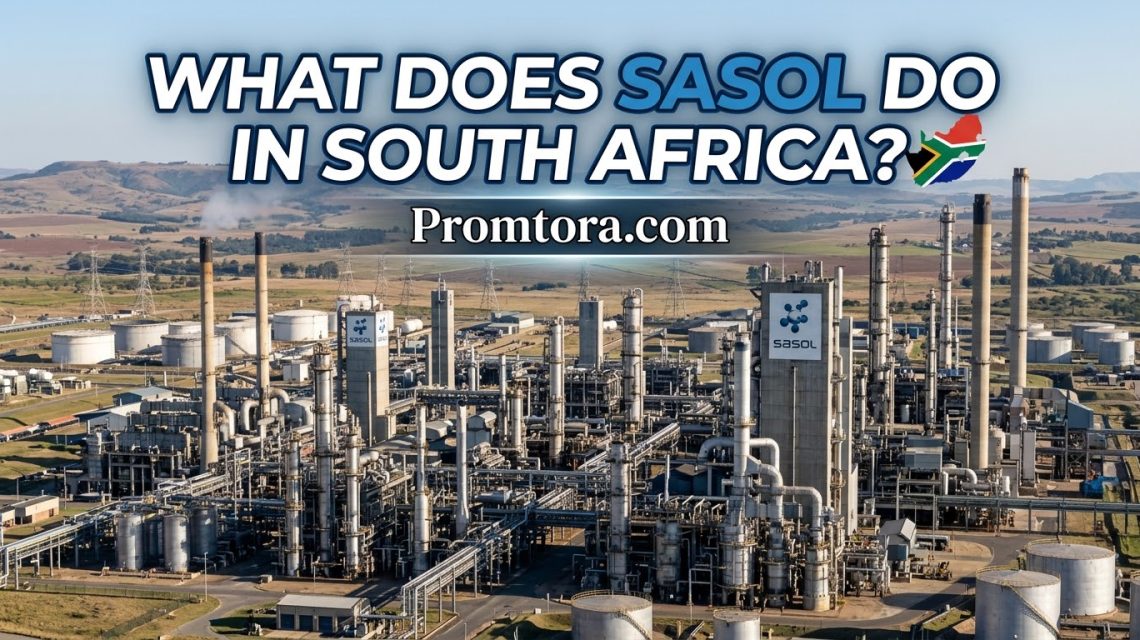
Secunda Operations is Sasol’s flagship facility and one of the largest industrial complexes in South Africa. It uses Fischer-Tropsch technology to convert coal (and gas) into synthetic crude, which is then refined into petrol, diesel, jet fuel, illuminating paraffin and other fuel products. The complex is a major contributor to South Africa’s inland fuel supply and reduces dependence on imported crude oil and coastal refining capacity.
Secunda is also a significant producer of chemical building blocks that feed into Sasol’s chemicals business.
4. Refining (Natref)
Sasol has a major interest in the Natref refinery in Sasolburg. Natref processes crude oil into refined fuels and other products. It complements the synthetic fuels produced at Secunda and helps supply the South African market with petrol, diesel and related products.
5. Chemicals Production and Marketing
Sasol produces a broad portfolio of chemicals in South Africa, including:
- Polymers (polyethylene, polypropylene, PVC and related products)
- Solvents and alcohols
- Waxes (Fischer-Tropsch waxes used in adhesives, packaging and other applications)
- Ammonia, fertilisers and explosives-related products
- Specialty and intermediate chemicals used in detergents, cosmetics, paints, plastics and industrial processes
These chemicals are sold both in the domestic market and exported to customers in more than 100 countries. The Southern Africa chemicals business is a key revenue and cash-flow generator for the group.
VIEW ALSO : What is the minimum salary in FirstRand?
6. Fuels Marketing and Retail
Sasol markets liquid fuels through wholesale, commercial and retail channels. It supplies fuel to other oil companies, industrial customers and its own retail network (including Sasol-branded service stations). The fuels business is closely linked to production from Secunda and Natref.
Key Facilities in South Africa
- Secunda Operations (Mpumalanga) – The heart of Sasol’s coal-to-liquids and chemicals production. One of the world’s largest single-site synthetic fuel facilities.
- Sasolburg Operations (Free State) – Home to chemical plants, the Natref refinery interest, and supporting infrastructure.
- Coal mines – Cluster of underground mines supplying Secunda and Sasolburg.
- Gas infrastructure – Pipelines and processing facilities linked to Mozambican gas supply.
Economic and Social Contribution
Sasol is a major employer and economic contributor in South Africa. Its operations support tens of thousands of direct and indirect jobs, particularly in Mpumalanga and the Free State. The company pays significant taxes, royalties and dividends, and its products underpin manufacturing, agriculture, mining, transport and household energy use.
The Secunda complex alone is frequently cited as a national industrial asset because of its contribution to fuel security and GDP. At the same time, Sasol is one of South Africa’s largest greenhouse-gas emitters, which places it at the centre of national debates about energy transition, air quality and climate policy.
Current Strategic Direction
Sasol is actively working to strengthen its South African operations while reducing its carbon footprint. Key focus areas include:
- Improving operational reliability and coal quality at Secunda
- Expanding the use of natural gas and exploring renewable energy partnerships
- Growing higher-value specialty chemicals
- Developing lower-carbon fuels and chemicals pathways (including potential power-to-liquids and green hydrogen-related projects)
- Maintaining financial resilience through cost control and portfolio optimisation
The company continues to invest in its South African asset base while balancing the need for energy security with longer-term decarbonisation goals.
Summary: What Sasol Actually Does Day-to-Day
In simple terms, Sasol in South Africa:
- Mines coal
- Imports and processes natural gas
- Converts coal and gas into synthetic fuels and chemical feedstocks using proprietary technology
- Refines crude oil (via Natref)
- Produces and sells a wide range of chemicals and polymers
- Markets petrol, diesel, jet fuel and related products
- Supports thousands of jobs and contributes materially to the national economy
It is both an energy company and a chemicals company, with deep roots in South African industrial history and a continuing central role in the country’s fuel and manufacturing supply chains.
Frequently Asked Questions
1. Is Sasol only a fuel company?
No. While fuels are a major part of its business, Sasol is also a significant chemicals producer. Polymers, solvents, waxes, ammonia, fertilisers and specialty chemicals form a large portion of its activities and exports.
2. Where are Sasol’s main plants in South Africa?
The two primary production hubs are Secunda in Mpumalanga (synthetic fuels and chemicals) and Sasolburg in the Free State (chemicals and refining via Natref). Coal mines are located nearby to supply these facilities.
3. Why is Secunda so important?
Secunda is the world’s largest commercial coal-to-liquids facility of its kind. It supplies a substantial share of South Africa’s inland liquid fuels and produces chemical building blocks used both locally and for export. It is also a major employer in the region.
4. Does Sasol still rely mainly on coal?
Coal remains the dominant feedstock for Secunda, but Sasol has increased the use of natural gas from Mozambique and is exploring further diversification and lower-carbon options as part of its long-term strategy.
5. How does Sasol contribute to the South African economy?
Sasol contributes through direct employment, indirect jobs in the supply chain, tax payments, fuel supply security, chemical feedstock for manufacturing, and export earnings. Its operations are especially important in Mpumalanga and the Free State.
Sasol remains a cornerstone of South Africa’s energy and chemicals industry. Understanding what it does — mining, gas processing, synthetic fuel production, refining, chemicals manufacturing and marketing — helps explain its continued economic significance and the strategic challenges it faces in a changing energy landscape.