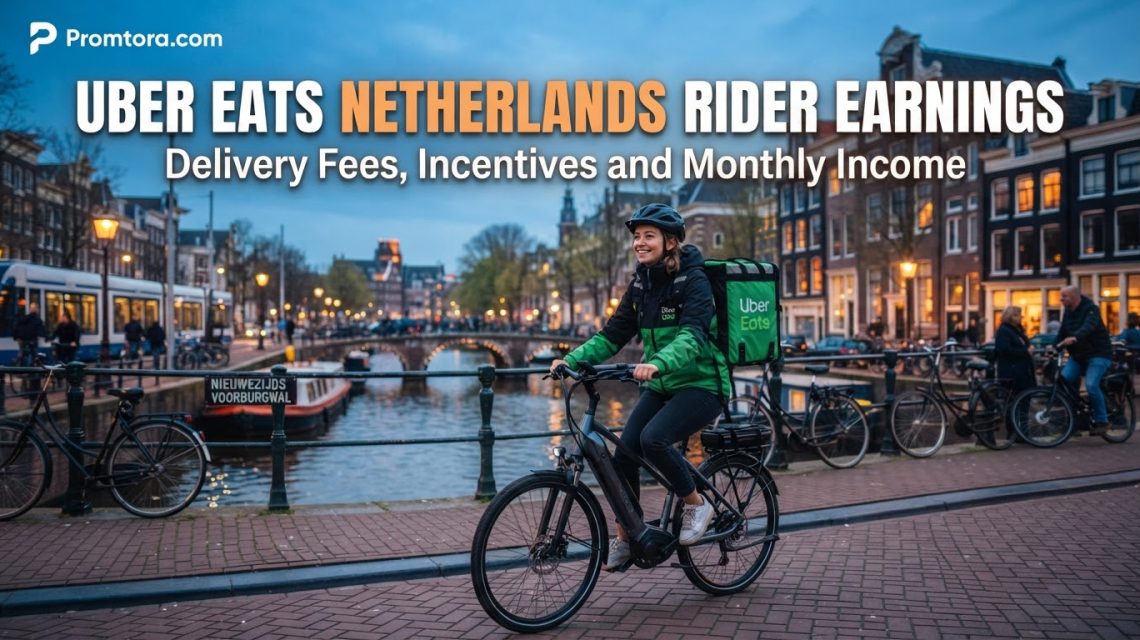
Uber Eats Netherlands Rider Earnings: Delivery Fees, Incentives and Monthly Income
This article examines how Uber Eats rider earnings are structured in the Netherlands in 2026. It covers the base hourly rate, kilometre allowances, tips, peak-time and performance incentives, joining and referral bonuses, and realistic monthly income ranges. Figures are drawn from official Uber communications, staffing-agency vacancies and market reports. Actual take-home pay varies widely according to hours worked, city, time of day, weather and individual efficiency.
How Uber Eats Rider Pay Works in the Netherlands
Under the current model, riders are typically engaged via a temporary employment contract with a staffing agency. They are paid an hourly wage for the time they are on shift and available for deliveries, including waiting time between orders. On top of the hourly rate they receive a kilometre allowance for distance travelled, keep 100 percent of customer tips, and can earn additional bonuses during busy periods or for meeting delivery targets.
Uber’s official materials state that riders aged 21 and over can earn up to €14.99 per hour as a base figure, with higher effective rates once incentives and allowances are included. Staffing partners frequently advertise rates of €16.19 bruto per hour (including 8 percent holiday pay) for adult riders, with the possibility of reaching €21 or more during peak periods when bonuses apply.
Younger riders receive lower age-banded rates in line with Dutch youth wage rules. Payments are processed weekly by the staffing agency and include a clear breakdown of hours, kilometres, tips and bonuses.
Base Hourly Wage and Age Bands
The core of earnings is the guaranteed hourly wage. Representative figures from agency vacancies and partner sites in 2026 include:
| Age | Typical Gross Hourly Rate (EUR) |
|---|---|
| 21 and older | €14.99 – €16.19 (often quoted with holiday pay included) |
| 20 | Around €12.95 |
| 19 | Around €9.71 |
| 18 | Around €8.64 |
| 16–17 | €6.48 – €7.16 |
These rates apply while the rider is online and available during a scheduled shift. Because the wage covers waiting time as well as active delivery time, earnings are more predictable than under the former pure per-delivery system.
Kilometre Allowance
In addition to the hourly wage, riders receive a per-kilometre payment for the distance covered while completing deliveries. Common rates are approximately €0.19 per kilometre for bicycle deliveries and slightly higher (around €0.24) for scooter deliveries. On a busy 30-hour week this allowance can add roughly €170 per month for bike riders or over €200 for scooter riders, depending on total distance.
The allowance helps offset vehicle wear, electricity or fuel costs. Riders are generally responsible for providing and maintaining their own bike or scooter.
Tips
Customers can add a tip through the Uber Eats app. Riders keep 100 percent of all tips. Tip income is highly variable and depends on customer behaviour, order value, service quality and location. In practice tips form a meaningful but unpredictable top-up to base earnings, especially during evenings and weekends.
VIEW ALSO : Booking.com Salaries in Amsterdam: Customer Service Pay
Incentives, Peak Boosts and Performance Bonuses
Uber Eats regularly runs incentives to encourage riders to work during high-demand periods. Examples from 2026 include:
- Peak-hour challenges such as an extra €42 for completing 15 deliveries within a three-hour window in Amsterdam.
- Quest-style bonuses that pay additional amounts once a set number of trips is reached within a defined period.
- Special event bonuses (for example during large festivals or holiday periods) that scale with the number of completed trips.
These incentives can push effective hourly earnings well above the base rate. Agency materials sometimes state that total pay can reach €21.34 bruto per hour when bonuses are maximised. Top-earner daily figures of around €197 (including bonuses, tips and kilometre pay) have been cited for strong days in Amsterdam, although these represent high performers rather than typical results.
Joining bonuses are also common for new riders. One widely advertised structure in late 2026 offered up to €200 in total: €35 after 10 trips within four days and a further €165 after 50 trips within twelve days, with conditions around peak-hour and weekend eligibility. Referral bonuses for existing riders who successfully introduce new couriers can reach €150–€300 depending on the city and the number of trips completed by the new rider.
Monthly Income Estimates
Monthly income depends primarily on the number of hours worked and the proportion of those hours that fall in peak periods. Approximate gross ranges based on available data are:
| Working Pattern | Approximate Gross Monthly Range (EUR) | Notes |
|---|---|---|
| Part-time (15–20 hours/week) | €900 – €1,600 | Common for students; higher if focused on peaks |
| Regular part-time / near full-time (25–35 hours/week) | €1,600 – €2,800 | Includes kilometre pay and moderate bonuses |
| Full-time intensive (35+ hours with strong peak focus) | €2,800 – €3,500+ | Top performers in busy cities; not typical |
Net pay will be lower after tax and social contributions. Because riders are employed through agencies, holiday allowance (usually 8 percent) and accrued holiday hours are included in the package. Sick-pay arrangements and basic insurance cover while on shift are also typically provided.
VIEW ALSO : Jumbo Supermarkets Salaries – Store, Driver and Manager Pay
Factors That Influence Earnings
Several variables determine how much an individual rider actually takes home:
- City and demand – Amsterdam, Rotterdam, Utrecht and other large cities generally offer higher order volume and more frequent incentives than smaller towns.
- Time of day and day of week – Lunch (approximately 11:30–14:00) and evening (17:00–21:00) peaks, plus weekends, produce the highest earnings.
- Weather – Rain and cold often increase order volume and may trigger extra boosts, although they also make the work more demanding.
- Vehicle type – Scooters can cover more ground and sometimes attract a higher kilometre rate, but involve higher running costs and licensing requirements.
- Efficiency – Knowing restaurant locations, optimal routes and multi-order stacking improves deliveries per hour.
- Acceptance rate and reliability – Consistent availability and good ratings help maintain access to the best shifts and promotions.
Riders who treat the work strategically—concentrating on peak windows, monitoring the heat map in the app, and taking advantage of active challenges—consistently outperform those who work random hours.
Costs and Practical Considerations
Riders usually supply their own bicycle, e-bike or scooter. Ongoing costs include maintenance, tyres, electricity or fuel, a power bank, and a suitable smartphone with data. Uber Eats or the staffing partner typically supplies an insulated delivery bag, and sometimes additional gear such as a jacket or rain trousers. Insurance while on shift is generally arranged through the employment contract, but personal vehicle insurance remains the rider’s responsibility.
Because the role is physically active and weather-dependent, suitable clothing and fitness are important. The flexibility to choose shifts makes the job popular with students and people seeking secondary income, but it also means income can fluctuate from week to week.
VIEW ALSO : What jobs pay well in the Netherlands?
Comparison with Other Delivery Platforms
Uber Eats sits alongside Thuisbezorgd (often via Scoober) and other local operators. Hourly rates across the major platforms are broadly similar in 2026, typically clustering around €15–€16 for adult workers once holiday pay is included. Differences appear mainly in the frequency and size of peak incentives, the density of restaurants in a given city, and the exact terms of the employment or agency contract. Some riders work multiple platforms (using a neutral bag) to reduce idle time, although platform rules on multi-apping should always be checked.
Conclusion
Uber Eats riders in the Netherlands in 2026 earn a combination of a guaranteed hourly wage (approximately €15–€16 bruto for adults, higher with incentives), a per-kilometre allowance, 100 percent of tips, and frequent peak or performance bonuses. Joining and referral promotions can provide additional short-term income. Realistic monthly gross earnings for part-time riders commonly fall between €900 and €1,600, while more intensive schedules can reach €2,500–€3,500 or more in busy cities when bonuses are maximised.
The move to an agency-employment model has increased income predictability and added holiday pay and basic protections, while preserving the ability to choose working hours. Earnings remain highly dependent on location, timing and individual effort. Prospective riders should review the current rates and active promotions offered by the local staffing partner, calculate expected net income after costs, and consider whether the physical and weather-related demands of the role suit their circumstances.
References
- Uber official Netherlands deliver pages (earnings, hourly rate and incentives). https://www.uber.com/nl/en/deliver/ and Dutch equivalent.
- Randstad Netherlands Uber Eats vacancies (hourly rates, kilometre allowance and joining bonuses 2026). https://www.randstad.nl/
- Flink × Uber Eats partnership information (hourly wage table and km bonus). https://riders.goflink.com/nl-en/uber-eats
- Uber Netherlands blog posts on referral bonuses and peak incentives (2026).
- Market analyses from PAKERS and related Dutch delivery-rider guides comparing platforms and 2026 earnings ranges.
- Additional agency and recruitment listings confirming €16.19 base rates, peak boosts and top-day figures for Amsterdam.