IIUM Malaysia: Courses, Admission Requirements, Fees, Rankings and What Students Should Know
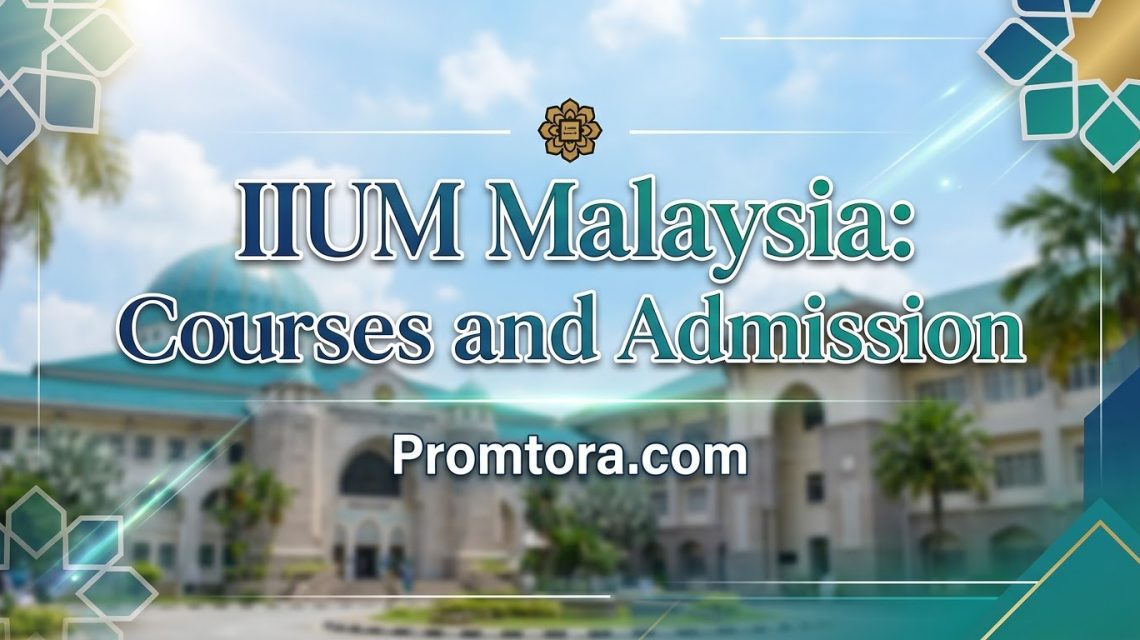
Walk around the Gombak campus of the International Islamic University Malaysia and the first impression is often the turquoise roofs, the central mosque and the mix of languages you hear between classes. IIUM was set up in 1983 with a deliberate dual mission: to offer mainstream academic programmes while grounding them in an Islamic intellectual framework. That combination still shapes who applies, how the curriculum is taught and what campus life feels like.
For Malaysian students it is one of the established public universities. For international applicants it is often chosen because tuition is relatively moderate by global standards, English is the main medium of instruction in most programmes, and the student body is genuinely multinational. This guide covers the practical points that matter when deciding whether IIUM is the right fit: what it offers, how competitive entry is, what it costs, where it stands in rankings, and the day-to-day realities students encounter.
What IIUM actually is
IIUM is a public university with its main campus in Gombak, Selangor, on the northern edge of the Kuala Lumpur metropolitan area. Additional campuses and facilities exist in Gambang (Pahang), Kuantan and Pagoh. It is organised into “kulliyyahs” (faculties) rather than conventional schools. The university describes its approach as integrating revealed knowledge with acquired knowledge — meaning Islamic studies and ethics sit alongside, and sometimes within, conventional disciplines such as law, economics, engineering and medicine.
The student population exceeds 30,000, with a notably high proportion of international students drawn from more than 100 countries. That diversity is one of the features most frequently mentioned by current and former students.
Courses and main faculties
IIUM offers foundation, undergraduate, master’s and doctoral programmes. The better-known undergraduate areas include:
- Ahmad Ibrahim Kulliyyah of Laws (AIKOL) — LLB and Shariah-related law programmes. These have a strong regional reputation, especially for students interested in Islamic finance, comparative law or legal practice in Muslim-majority jurisdictions.
- Kulliyyah of Economics and Management Sciences (KENMS) — economics, business, accounting and related fields.
- Kulliyyah of Information and Communication Technology (KICT) — computer science, information systems and ICT.
- AbdulHamid AbuSulayman Kulliyyah of Islamic Revealed Knowledge and Human Sciences — Islamic studies, Arabic, psychology, political science, communication and other humanities and social-science programmes.
- Kulliyyah of Engineering — various engineering disciplines.
- Kulliyyah of Medicine and health-related programmes — including the medical degree (longer duration and significantly higher fees).
- Education, architecture and environmental design, science, and tourism and languages programmes.
Foundation pathways exist for students who need a bridging year, particularly those aiming for medicine, law or engineering. Exact programme lists and structures should always be checked on the official admissions pages, as offerings and credit requirements are updated periodically.
Admission requirements
Entry standards differ by programme, level and whether the applicant holds Malaysian or international qualifications.
For Malaysian applicants, the usual routes are STPM, matriculation, foundation (including IIUM’s own Centre for Foundation Studies), diploma or equivalent. Specific subject requirements apply for competitive programmes such as medicine, law and engineering.
For international applicants, common benchmarks include:
- A-Levels (often a minimum of three subjects at grade C or higher in a single sitting, with higher requirements for selective programmes),
- IB Diploma (indicative scores around 28 or higher for many programmes),
- recognised national secondary certificates or foundation programmes,
- English language proficiency — typically IELTS 5.5–6.0 overall (sometimes with minimum band scores) or equivalent TOEFL. Some programmes, especially medicine, set higher thresholds. IIUM also administers its own English Placement Test; certain qualifications can exempt students from it.
Medicine and a few other professional programmes have additional academic and sometimes interview or aptitude requirements. Applications are handled through the Academic Management and Admission Division. International students must also secure a Student Pass via the Education Malaysia Global Services (EMGS) process after receiving an offer.
Deadlines and intake months (commonly around February/March and September/October) should be confirmed for the specific cycle, as they can shift.
Fees — what international and local students actually pay
Fee structures separate Malaysian and international students clearly. Local fees are substantially lower and are partly subsidised.
VIEW ALSO : Best Cities to Live in China for Foreigners
For international undergraduates, total programme costs (covering entrance fee, tuition, recurrent charges, mahallah/hostel allocation in many packages, takaful insurance and graduation fee) for a typical four-year degree often fall in these approximate ranges based on recent published schedules:
| Faculty / area | Indicative total for 4-year programme (international) |
|---|---|
| Economics & Management Sciences | Around RM71,000 – RM72,000 |
| Islamic Revealed Knowledge & Human Sciences | Around RM71,000 – RM72,000 |
| Information & Communication Technology | Around RM81,000 |
| Laws | Around RM90,000 – RM91,000 |
| Engineering | Often above RM110,000 |
| Medicine (longer programme) | Significantly higher — can exceed RM300,000–380,000 depending on the exact schedule |
Figures are compiled from recent official and secondary fee schedules and are approximate. They may exclude Sales and Service Tax (SST) that applies to certain charges for international students, and fees are subject to revision. Always verify the current schedule for the intended intake on the IIUM finance or admissions pages.
Hostel (mahallah) charges are frequently bundled into the published totals for international packages; living costs beyond accommodation (food, transport, personal expenses) still need to be budgeted separately. Application and EMGS-related fees are additional up-front costs.
Postgraduate fees vary by mode (coursework, research or mixed) and kulliyyah; they are generally lower on an annual basis than professional undergraduate programmes such as medicine.
VIEW ALSO : Malaysia-Taiwan Economic Ties: A Caution
Rankings and reputation
In the QS World University Rankings, IIUM has fluctuated in the 600–700 band in recent editions (reported around 613 in the 2026 ranking and 691 in the subsequent 2027 release). It performs more strongly in certain subject areas, notably theology, divinity and religious studies, where it has appeared in the global top 30. Within Malaysia it typically sits in the mid-tier of public universities rather than at the very top of the national table dominated by Universiti Malaya, UKM, UPM, USM and UTM.
Rankings capture research output, reputation surveys and internationalisation metrics. They do not fully reflect teaching quality in specific professional programmes or the value of the Islamic-integrated curriculum for students who specifically want that orientation. Employer recognition is solid within Malaysia and in many Muslim-majority countries, particularly for law, Islamic studies, economics and education graduates.
What students should know about campus life and practicalities
IIUM maintains an explicitly Islamic campus ethos. Dress codes, single-sex hostel arrangements in many mahallahs, prayer facilities and an emphasis on ethical conduct are part of daily life. Alcohol is prohibited and the overall atmosphere is more conservative than at many secular Malaysian universities. Students who are comfortable with or actively seeking that environment tend to settle in more easily than those who prefer a fully secular campus culture.
The international mix is a genuine strength. Friendships and networks across nationalities are common. English is widely used in teaching and administration, although Malay is the national language and Arabic features in certain programmes and religious activities.
Gombak is not in the heart of Kuala Lumpur; travel to the city centre takes time by public transport or car. On-campus facilities cover most daily needs, which reduces the inconvenience for students who spend most of their time on campus.
Visa and immigration compliance for international students is strict. The Student Pass process through EMGS, medical screening and timely renewals are the student’s responsibility once the university has issued the necessary support documents. Overstaying or working in breach of pass conditions carries serious consequences.
Who IIUM tends to suit
IIUM works well for students who want a recognised Malaysian public-university degree at moderate cost, an international peer group, and a curriculum that takes Islamic perspectives seriously. It is particularly relevant for those targeting careers in Islamic finance, Shariah-compliant sectors, education, public service in Muslim-majority contexts, or professional fields where the dual academic and ethical framing is valued.
It is less ideal for applicants seeking a purely secular environment, the highest global research rankings, or the most competitive entry into ultra-selective programmes where other Malaysian or overseas universities may hold a clearer edge.
As with any university choice, the decisive steps are to check the latest programme-specific entry requirements and fee schedules on the official IIUM admissions and finance pages, confirm recognition of the intended qualification in the student’s home country or target employment market, and speak with current students or recent graduates in the same faculty if possible. The numbers and rankings provide a useful starting map; the daily experience on campus determines whether the place actually fits.