China Employee Social Insurance Contributions: Pension, Medical Insurance and Housing Fund Deductions
China requires most formal employees to join social insurance. Workers and employers both pay into the system each month. The main parts are pension, medical insurance and the housing fund. Rates differ by city. This guide explains the deductions in simple language so you can read your payslip with confidence.
Many people feel confused when they first see the deductions. The names look technical. The percentages change by location. This article breaks each part down. It shows what you pay, what your employer pays, and why the numbers matter for your future.
What social insurance covers in China
People often call the full system “five insurances and one fund”. The five insurances are pension, medical, unemployment, work injury and maternity. In most cities maternity cover now sits inside medical insurance. The housing provident fund is the separate “one fund”. It helps workers save money for housing needs.
Your employer takes your share from your monthly pay. The company also pays its own larger share. Both amounts use a contribution base. That base sits between a local minimum and a local maximum. Cities update these limits every year.
Social insurance protects you in several ways. Pension support helps you after you stop working. Medical cover pays part of hospital and clinic costs. Unemployment support can help if you lose your job. Work injury cover pays when you get hurt at work. The housing fund builds savings you can use for a home.
Pension contributions explained
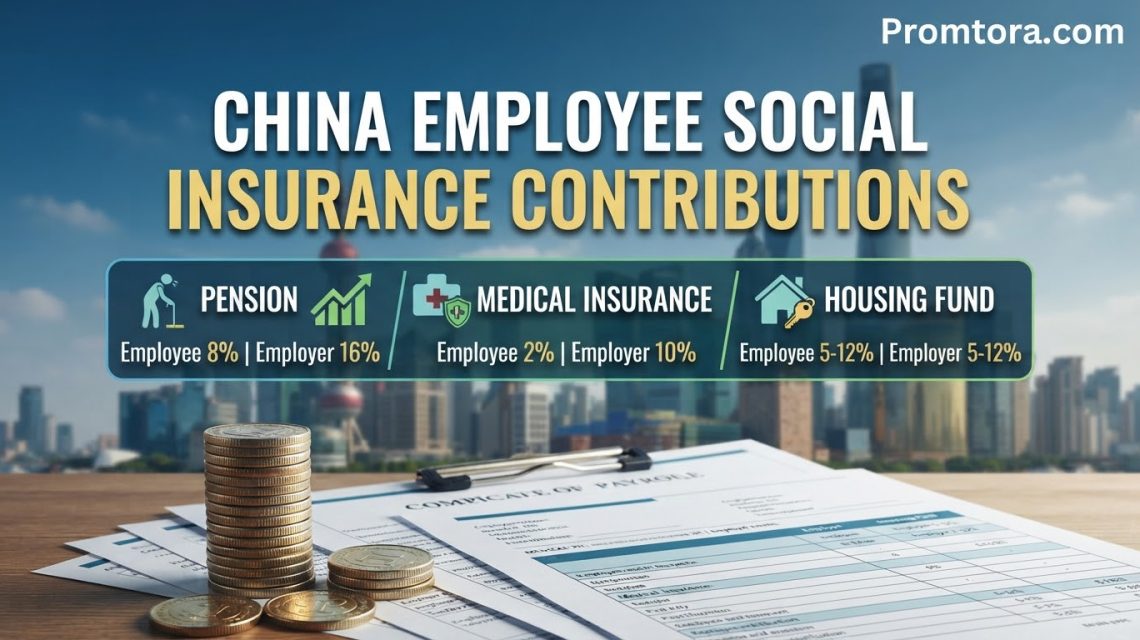
Pension is the largest deduction for most workers. The employee usually pays 8% of the contribution base. The employer usually pays 16%. These rates apply in major cities such as Beijing, Shanghai, Guangzhou and Shenzhen.
You build rights to a future pension through these monthly payments. The money goes into a personal account and a shared pool. The personal part follows you if you change jobs inside China. The shared part supports the wider system.
Rules on minimum years of contributions are changing. Today many people need 15 years of payments to claim a basic pension. From 2030 the required period will rise step by step. It will move toward 20 years over time. Plan early if you expect to retire in China.
Retirement ages are also rising slowly. Men and women will see small increases in the coming years. Check the latest national rules when you plan your long-term future. Your local social security office can confirm the exact requirements for your case.
Foreign workers often join the same pension system. Some countries have social security agreements with China. Those agreements can reduce double payments. Ask your employer or a tax adviser if you hold a foreign passport.
Medical insurance contributions
Medical insurance covers basic health costs. The employee rate is often 2% of the contribution base. Some cities add a small fixed fee each month. Beijing is one example that uses a small extra fee. The employer rate is higher and varies by city.
In Beijing the employer rate is about 9.8%. In Shanghai it is about 9%. In Guangzhou and Shenzhen the employer rate is lower, around 6% to 7%. These numbers include maternity cover in most places now. You do not pay a separate maternity line in those cities.
Medical insurance helps with hospital stays, some medicines and clinic visits. It does not cover every cost. Many people buy extra commercial health insurance for wider protection. The basic scheme still forms the first layer of support.
Your medical account receives part of the employee payment. You can use that balance for certain outpatient costs and medicines. The shared pool pays for larger hospital bills under the local rules. Keep your social security card or electronic record ready when you seek care.
Housing provident fund deductions
Both you and your employer pay into the housing provident fund. Common rates range from 5% to 12%. Many employers choose 5% or 7%. You and your employer usually pay the same percentage. The money goes into an account in your name.
You can use the fund for home purchase, rent or related housing costs. Local rules decide the exact uses and limits. Some cities allow withdrawals for rent under clear conditions. Other cities focus more on purchase and renovation.
The housing fund is not a tax. It is your money held in a special account. It grows with the monthly payments from both sides. When you leave China or meet certain conditions, you may withdraw the balance under the rules. Always confirm the process with the local housing fund centre.
Higher housing fund rates increase both your deduction and your employer’s cost. Some companies offer a higher rate as part of the total package. Compare the rate when you review a job offer. A higher rate builds savings faster but reduces net pay today.
Unemployment and work injury cover
Unemployment insurance usually takes a small share from both sides. A common pattern is 0.5% from the employee and 0.5% from the employer. Some cities use slightly different splits. This cover can provide a temporary benefit if you lose your job and meet the conditions.
Work injury insurance is paid only by the employer. Rates range from about 0.2% to 1.9%. The exact rate depends on the industry risk level. Office work sits at the low end. Heavy industry sits at the high end. You do not see a work injury deduction on your own payslip.
These two parts complete the five insurances. Together with pension and medical they form the core social safety net for formal workers in China.
Typical rates at a glance
| Item | Employee rate (typical) | Employer rate (typical) |
|---|---|---|
| Pension | 8% | 16% |
| Medical (incl. maternity) | 2% (+ small fee in some cities) | About 6%–10% |
| Unemployment | 0.5% (or similar) | 0.5% (or similar) |
| Work injury | None | 0.2%–1.9% |
| Housing fund | 5%–12% (often 5%–7%) | Same as employee |
Rates and bases change by city and by year. Always check the current local rules for your workplace.
How the contribution base works
Cities set a minimum and maximum contribution base each year. Your actual base is usually your average monthly pay from the previous year. If your pay is below the floor, the system uses the floor. If your pay is above the cap, the system uses the cap.
In 2026 large cities use floors around RMB 5,500 to RMB 7,500. Caps often sit near three times the local average wage. Beijing and Shanghai have higher bases than many other cities. Guangzhou and Shenzhen use their own published limits.
New graduates and lower-paid workers often contribute on the floor. High earners contribute on the cap. Most people fall somewhere in the middle. Your HR team calculates the base and shows it on internal records.
The base affects every percentage deduction. A higher base means higher pension, medical and housing payments. It also means higher future pension rights in many cases. Understand your base when you compare offers or plan savings.
What you see on your payslip
Your payslip shows the employee deductions clearly in most systems. Look for lines named pension, medical, unemployment and housing fund. The amounts should match the rates times your contribution base. Small rounding differences can appear.
The employer share does not reduce your take-home pay. It is an extra cost for the company. Some payslips show the employer amounts for information. Others show only the employee deductions. Ask HR if a line is unclear.
Total employee deductions often reach about 10% to 15% of the contribution base. The exact total depends on your city and the housing fund rate. A worker with an 8% pension, 2% medical, 0.5% unemployment and 7% housing fund pays 17.5% in simple terms. Real totals vary.
Income tax is separate from social insurance. China calculates tax after social insurance deductions in the standard method. Lower social insurance payments can mean higher taxable income. The two systems work together on your final net pay.
Why cities show different numbers
China sets national framework rules. Local governments set the exact rates and bases. That is why Beijing, Shanghai, Guangzhou and Shenzhen do not use identical numbers. Smaller cities also set their own floors and caps.
VIEW ALSO : China Average Salary by City: Beijing, Shanghai, Shenzhen and Guangzhou
Medical rates show the biggest city differences. Pension stays close to 16% employer and 8% employee in most places. Housing fund rates depend on the choice your employer makes within the allowed band. Always use the figures for the city where you work.
If you move to a new city for work, your contribution base and some rates will change. Transfer rules exist for pension and other accounts. Start the transfer process early with the help of both employers. Delays can create gaps in your records.
A simple number example
Suppose your contribution base is RMB 20,000 in a city with standard rates. You pay about RMB 1,600 for pension at 8%. You pay about RMB 400 for medical at 2%. You pay RMB 1,000 for a 5% housing fund. You also pay a small unemployment amount. Your total employee deduction is roughly RMB 3,000 to RMB 3,100 before other items.
Your employer pays a larger amount on top of your salary. That employer cost does not come from your net pay. In the same example the employer might pay over RMB 5,000 for social insurance and housing fund combined. The exact employer total depends on the medical rate and housing fund rate.
This example uses round numbers for clarity. Your real payslip will use your exact base and local rates. Ask HR for a breakdown if you want to check the math.
Foreign employees and special cases
Foreign employees who hold valid work permits often join the same social insurance system. Some nationalities benefit from bilateral social security agreements. Those agreements can exempt pension or other parts for a period. Check whether your country has an agreement with China.
Short-term assignments sometimes follow different rules. Company policy and local practice both matter. Get written confirmation of what you will pay before you start work. Keep records of every contribution in case you later claim benefits or request a refund under the rules.
VIEW ALSO : Artificial Intelligence Careers in China: Salaries & Job Opportunities
Part-time and flexible workers may face different enrolment rules. Formal full-time employees almost always join the full system. Confirm your status with HR and the local social security bureau if your contract is unusual.
How to check and manage your contributions
You can view your social insurance records through local government apps or websites. Many cities offer online accounts linked to your ID card. Log in regularly to confirm that payments appear each month. Report missing months to HR quickly.
The housing fund also has its own online and app services. You can see the balance and the monthly inflows. Some cities let you apply online for withdrawals or loans linked to the fund. Follow the official channels only.
When you change jobs, ask the old employer to confirm the final contributions. Start the transfer or continuation process with the new employer. Gaps in payments can affect future pension rights and medical access.
Keep personal copies of key documents. Annual statements, transfer forms and payslips help if questions arise later. Digital screenshots and downloads are useful when systems change.
Common questions workers ask
People often ask why the deduction looks high. The answer is that pension and housing fund take the largest shares. Medical and unemployment add smaller amounts. Together they reach a noticeable percentage of the base.
Workers also ask whether they can opt out. In normal full-time formal jobs the answer is no. Social insurance is mandatory for covered employees. Opting out is not a standard choice.
Another common question concerns the return of money when leaving China. Pension personal accounts may allow a withdrawal under certain conditions for foreigners. Housing fund balances often allow withdrawal when you leave and cancel your account. Rules are detailed and change. Use official channels and, if needed, professional advice.
People also ask how social insurance affects take-home pay. Higher contributions reduce net pay today. They also build future protection and housing savings. Many workers accept the trade-off as part of formal employment in China.
VIEW ALSO : China’s Most Valuable Technology Companies and Their Revenue
Practical tips for employees
- Read every new payslip and note the social insurance lines.
- Confirm your contribution base with HR at least once a year.
- Learn the current rates for your city from official sources.
- Track your housing fund balance and pension records online.
- Ask about the housing fund rate when you receive a job offer.
- Start transfer procedures early when you change cities or jobs.
- Keep copies of annual statements and key forms.
These simple habits reduce surprises and protect your long-term benefits.
Summary
China’s social insurance system takes clear monthly amounts from employee pay. Pension at 8%, medical at about 2%, and the housing fund at a matching rate form the main deductions. Employer rates are higher and add a large cost for companies. Cities set different bases and some different rates. Knowing your local numbers helps you understand your net pay and your future rights.
Pension builds retirement support. Medical insurance helps with health costs. The housing fund builds savings for housing needs. Unemployment and work injury cover complete the core set. Together they create a structured safety net for formal workers.
Always check the latest local rates and bases. Your HR team and the city social security and housing fund centres are the best sources for exact figures. Use this guide as a clear starting point, then confirm the details that apply to your own contract and city.
References
- HROne. “China Social Insurance Contribution Rates 2026.” Rates for pension, medical and contribution bases in major cities. https://hrone.com/blog/social-insurance-contributions-calculation-china/
- Knit People. “EOR China Costs in 2026: Five Insurances and Housing Fund Compared Across 11 Cities.” City-by-city employer and employee rates. https://www.knitpeople.com/blog/eor-china-costs-in-2026-five-insurances-housing-fund-compared-across-11-cities
- NNRoad. “China Employer Contributions 2026.” Shanghai, Beijing and other city rate summaries. https://nnroad.com/blog/employer-contributions-in-china/
- Employsome. “Health Insurance China 2026.” Medical and maternity rates by city. https://employsome.com/hire/china/health-insurance-china/
- Local human resources and social security bureaus in Beijing, Shanghai, Guangzhou and Shenzhen — official annual base and rate notices.